
 Communication happens daily in an organization through emails, phone calls, instant messages, texts, and meetings.
The goal of communication is to help people understand each other. But even in well-run organizations, communication breakdowns happen. It may quietly appear in missed deadlines, duplicated work, unclear expectations, frustrated employees, and unhappy customers.
Together, these communication breakdowns create one of the most expensive hidden costs organizations face today — miscommunication.
The good news? Communication is a skill that can be learned and strengthened. Good communication can improve productivity, employee engagement, leadership effectiveness, and customer relationships across an entire organization.
The Real Cost of Poor Workplace Communication
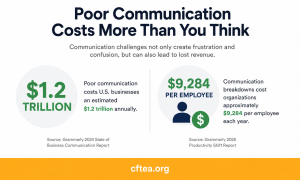
Communication challenges not only create frustration and confusion, but can also lead to lost revenue.
According to Grammarly’s 2024 State of Business Communication Report, poor communication costs U.S. businesses an estimated $1.2 trillion annually. Additionally, research from Grammarly’s 2025 Productivity Shift Report estimates these communication breakdowns cost organizations approximately $9,284 per employee each year.
These numbers become even more striking when you look at everyday workplace experiences. Every knowledge worker surveyed reported experiencing miscommunication at least once a week, while one in four said it happens multiple times each day.
The consequences of poor workplace communication add up quickly. Research from the 2025 Axios HQ State of Internal Communications Report found:
- Organizations lose hundreds of productive work hours — and thousands of dollars in salary costs each year — because of ineffective communication.
- Employees may lose the equivalent of 35 or more workdays annually due to unclear or inefficient communication.
- While 80% of leaders believe their communications are clear, only about half of employees agree.
These aren’t isolated incidents. Every unclear email, misunderstood instruction, or meeting without clear next steps creates unnecessary work that slows teams down and makes it harder to do their jobs effectively.
Communication Is More Than a Soft Skill
When people think about communication, they often picture presentations or public speaking. In reality, communication influences nearly every aspect of the workplace.
Managers rely on communication to coach employees, provide feedback, and build trust. Teams depend on it to collaborate effectively and solve problems. Customer-facing employees use it to strengthen relationships and deliver positive experiences.
Strong communication also plays an important role in employee engagement. Research shows that 74% of employees say feeling heard at work increases their motivation and engagement. That’s because communication isn’t just about exchanging information. It’s how organizations recognize employees, establish expectations, solve problems, and build healthy workplace cultures.
Every conversation is either moving your organization forward or slowing it down.
Communication Can Be Learned
Fortunately, effective communication is a skill everyone can build with practice and intentional learning.
Whether you’re writing emails, leading meetings, navigating difficult conversations, or presenting ideas to leadership, improving your communication skills helps you become more confident and more effective in your role.
At CFTEA, we offer professional development opportunities designed to strengthen communication at every level. Professionals can choose from courses like:
- Written Communication – Receive personalized feedback from an assisting instructor to strengthen business writing, clarity, and professionalism.
- Verbal Communication – Work one-on-one with CFTEA Executive Director Andrew Lederer to build confidence and strengthen communication skills tailored to your professional goals.
- Effective Communication Bundle – Build stronger communication skills through a curated collection of courses focused on writing, speaking, listening, collaboration, and workplace effectiveness.
- Understanding Generational Differences – Learn how different generations communicate, what motivates them, and strategies for reducing misunderstandings while building stronger collaboration across teams.
Better Communication Starts with One Conversation
Organizations invest in new technology, improve processes, and develop strategic plans to stay competitive. But one of the most valuable investments they can make is helping their people communicate more effectively.
Strong communication reduces misunderstandings, strengthens leadership, improves teamwork, and creates better experiences for both employees and customers.
Like any professional skill, communication improves through consistent learning and practice. It starts with one conversation. One course. One opportunity to improve. Over time, those small investments strengthen individuals, teams, and entire organizations.
Strengthen Communication Skills with CFTEA
Whether you’re looking to improve business writing, become a more confident speaker, strengthen your listening skills, or develop better communication across your organization, CFTEA offers flexible professional development opportunities designed to help you succeed.
Explore our Effective Communication Bundle, enroll in an individual communication course, or discover how our certificate and diploma programs can support your long-term career growth.
Contact CFTEA today to learn how stronger communication skills can strengthen your workforce — and your organization.
Frequently Asked Questions
What causes poor workplace communication?
Poor workplace communication can stem from a variety of factors, including unclear expectations, inconsistent messaging, lack of feedback, ineffective meetings, and communication barriers between departments or teams. Remote and hybrid work environments, as well as differences in communication styles, can also contribute to misunderstandings. Identifying these challenges is the first step toward improving communication and building a more collaborative workplace.
What are the signs of poor workplace communication?
Poor workplace communication often shows up in everyday operations. Common signs include:
- Missed deadlines or duplicated work
- Employees frequently asking for clarification
- Meetings that end without clear action items
- Misunderstandings between teams or departments
- Low employee engagement or morale
- Customer complaints caused by inconsistent information
When these issues occur regularly, they can reduce productivity, increase frustration, and negatively impact business performance.